
5 mistakes when training a sales team
Your team completes the training, but doesn't apply it in front of the customer. 4,050 salespeople explain why in the State of Sales 2026 report.
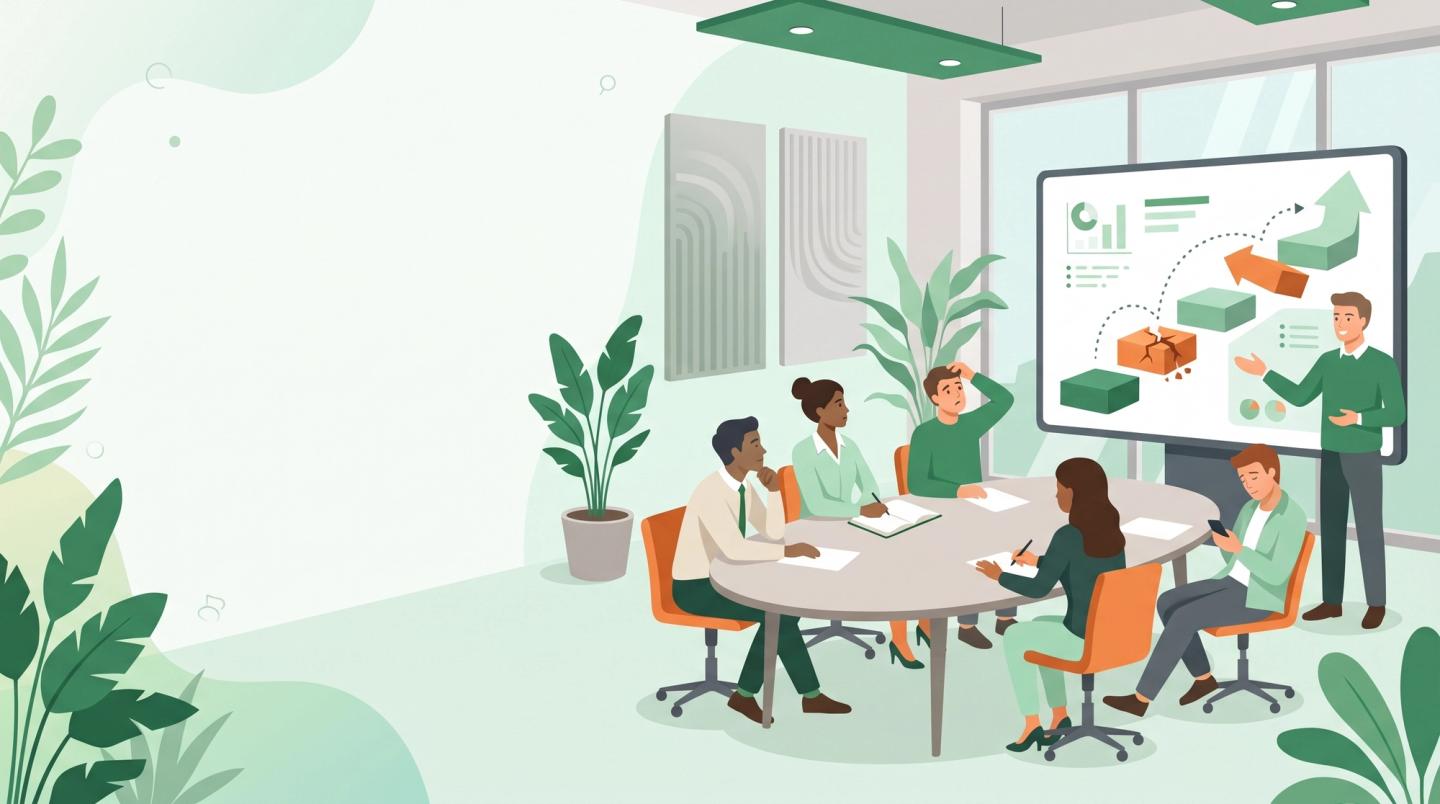
According to the latest edition of Salesforce's State of Sales report, 52% of salespeople say the sales training they receive doesn't give them the skills they need. The study is based on a survey of 4,050 sales professionals in 22 countries, and although it reflects the views of salespeople across every industry, it helps explain at what point training stops being useful to the team.
These are the five mistakes that emerge from their answers.
1. Training in the same old format
The same report shows that salespeople spend only 40% of their time selling, since the rest goes on prospecting, preparing meetings, updating the CRM and travelling between customers. With a schedule like that, a two-hour session in the meeting room is hard to fit in, and when it does happen, what is covered has to compete with everything else the salesperson has pending.
On top of that, product knowledge usually sits in PDF data sheets, catalogues and long manuals, which contain all the information but which nobody opens between one visit and the next, so the salesperson ends up asking a colleague or working out the answers in front of the customer.
2. Letting the first practice happen with the customer
41% of salespeople say they don't get enough opportunities to practise before meeting a customer, while only 26% of teams run role-play sessions. In most cases, then, the first time a salesperson handles a difficult objection is in front of the customer who raises it.
When the product is technical this matters even more, because many objections are very specific questions about compatibility, regulations or installation, and a hesitant or incomplete answer is enough to make the customer doubt the product, even when it is the right one.
3. Training once and never coming back to it
In addition, 46% of salespeople say they rarely get feedback on their sales conversations. Training often coincides with a product launch or the annual sales meeting, and afterwards nobody checks how much of it has stuck.
Hermann Ebbinghaus described in 1885 how anything that isn't reviewed is quickly forgotten, especially in the first few days, and Murre and Dros reached the same result when they repeated his experiment in 2015. When the product also changes and the training material isn't updated, the little that is remembered may already be out of date.
4. Making everything depend on the sales manager
75% of salespeople believe they would reach their targets more easily with a coach or mentor, yet 40% say their manager's lack of time is an obstacle to their training. Very often, the person who knows the product and the customers best is also the one with the least time to pass that knowledge on, and it isn't recorded anywhere the team can turn to.
5. Assuming training ends with the salesperson
The report also includes a finding about customers: 67% of salespeople say their customers need extensive education, and 57% notice they take longer to decide than they used to. A customer who doesn't fully understand the product takes longer to buy, buys with doubts and is unlikely to recommend it, however well the salesperson has done their part.
How to avoid these mistakes, or fix them if you're already making them
The first change is the format. The content of a data sheet or a manual can reach the salesperson as audio to listen to in the car, a short video about the latest addition to the catalogue or a one-page summary to review before walking into a visit, so that training fits into their schedule instead of competing with it.
Practice works best before the meeting and with your customers' real objections, which your most experienced salespeople know well and which also reach technical support on a regular basis. Rehearsing the answers to those questions is the most reliable way to check that the team really knows the product.
To make sure what has been learned isn't lost, short and spaced reviews, such as a quiz the following week or a summary when a new version comes out, work better than repeating the full training a year later. It is important, though, that the material is updated every time the product changes.
What the sales manager and the top-performing salespeople know can also be captured in material the team can consult whenever they need it, with the arguments that work, the answers to common objections and the differences from the competition, which is exactly what a battle card brings together. That way, the manager can spend their time supporting the team in the situations that call for it.
Finally, much of that material can be adapted for customers or distributors, for example as an installation video, a how-to infographic or a summary of the differences between models, because the customer who knows how to get the most out of a purchase is the one who places the next order.
Traingenio starts from the documentation your company already has, such as data sheets, catalogues or manuals, and turns it into videos, podcasts, quizzes, battle cards and role plays built on your customers' objections, so that every salesperson gets what they need on their phone. When the product changes, you update the document and regenerate the affected material.
See how it works for sales teams →
About the study: the seventh edition of State of Sales is based on an anonymous survey carried out between August and September 2025. Spain is part of the sample with 150 responses, although the report doesn't publish data by country, and the results reflect salespeople's perceptions rather than measured outcomes.
Sources: Salesforce, State of Sales, 7th edition (2026). Murre and Dros, "Replication and Analysis of Ebbinghaus' Forgetting Curve", PLOS ONE (2015).